
Bringing the World's Best Biology to You
Free Biology NEET Video Lectures for Structural Organisation In Animals
Exams: NEET / IIT-JEE
Audience:
- General Public
- Educators of H. School / Intro Undergrad
- Educators of Adv. Undergrad / Grad
- Student
- Researcher
- Educators
Teachers: Masters / Phd. Holders
VIDEO LECTURES FOR STRUCTURAL ORGANISATION IN ANIMALS (CLASS 11)
NEET BIOLOGY VIDEOS
04 Free Biology NEET Video Lectures available for Structural Organisation In Animals (Neet Biology)
Power up your NEET Exam prep with 04 Chapter-Wise Biology Video Lectures for Structural Organisation In Animals at brillianttutorial.in. Crafted by Brilliant Tutorial experts with 25 years of NEET insights.
Related Videos
Demo Video Lecture 01
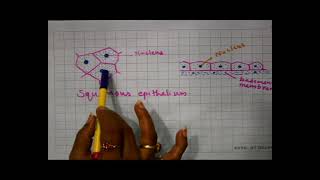
Structural Organisation In Animals | Video #1 | NEETClass 11th Biology Video Lecture

Video Lecture 02

Structural Organisation In Animals | Video #2 | NEETClass 11th Biology Video Lecture

Video Lecture 03

Structural Organisation In Animals | Video #3 | NEETClass 11th Biology Video Lecture
Video Lecture 04

Structural Organisation In Animals | Video #4 | NEETClass 11th Biology Video Lecture
Why Excel in Structural Organisation In Animals for NEET Exam
Overview
NEET Class 11 Biology NCERT Chapter 7 Structural Organisation in Animals
In this video, we will cover:
1. Animal Tissues
2. Types of Animal Tissues
3. Epithelial Tissue
4. Types of Epithelial Tissue
5. Simple Epithelium
6. Squamous epithelium
7. Cuboidal epithelium
8. Modifications of Cuboidal & Columnar epithelium
9. Compound Epithelium
10. Cell junctions
11. Connective Tissue
12. Types of Connective Tissue
13. Loose Connective Tissue – Areolar Tissue
14. Dense Connective Tissue
15. Supportive Connective Tissue - Cartilage
16. Supportive Connective Tissue - Bone
17. Fluid Connective Tissue - Blood
18. Fluid Connective Tissue - Lymph
19. Muscular Tissue
20. Types of Muscular Tissue
21. Types of Muscular Tissue – Skeletal Muscles
22. Types of Muscular Tissue – Smooth Muscles
23. Types of Muscular Tissue – Cardiac Muscles
24. Nervous Tissue
25. NEET Concepts Biology
26. Structural Organisation in Animals NEET Questions
27. NEET Class 11 Biology
28. NEET Practice Questions 2024
29. NEET 2024 Preparation
30. Structural Organisation in Animals NEET Questions
31. NEET Biology Class 11 Concepts
32. Class 11 Biology Chapter 7 Structural Organisation in Animals NEET Concepts
33. Structural Organisation in Animals Class 11 Biology NEET
34. Brilliant Tutorial Delhi NEET pe Jeet LH Biology
35. Biology for NEET Chapter 7
36. CBSE Class 11 Biology Structural Organisation in Animals NCERT Chapter 7 NEET
37. Structural Organisation in Animals NEET Concepts for 2024
38. Structural Organisation in Animals NEET Practice Questions for 2024
39. Structural Organisation in Animals NEET Coaching
40. NEET Concepts Chapter 7 Class 11 Biology
41. Brilliant Tutorial Delhi NEET pe Jeet LH Biology
42. FREE NEET Structural Organisaion in Animals
43. FREE of Cost NEET Coaching 2024
44. Structural Organisaion in Animals NEET 2024
45. Brilliant Tutorial Delhi NEET Biology
Chapter 7 Structural Organisation in Animals Class 11 NEET Biology deals with:
- In unicellular organisms, all functions like digestion, respiration and reproduction are performed by a single cell. In multicellular animals, a group of similar cells along with intercellular substances perform a specific function; such an organization is called tissue.
- Tissues are organized in specific proportion and pattern to form an organ. Examples- stomach, lung, heart and kidney.
- When two or more organs perform a common function by their physical and/or chemical interaction, they together form organ system. Examples- digestive system, respiratory system, etc.
- Cells, tissues, organs and organ systems exhibit division of labor for the survival of the whole body.
Epithelial tissues
- This tissue which has a free surface faces either a body fluid or the outside environment and thus provides a covering or a lining for some part of the body is called epithelial tissues.
- The cells are compactly packed with little intercellular matrix.
There are two types of epithelial tissues
- simple epithelium
- compound epithelium.
- Simple epithelium is composed of a single layer of cells and functions as a lining for body cavities, ducts etc.
- Compound epithelium consists of two or more cell layers and has protective function as it does in our skin.
Simple epithelium
On the basis of structural modification of the cells, simple epithelium is further divided into three types
- Squamous
- Cuboidal
- Columnar
- The squamous epithelium is made of a single thin layer of flattened cells with irregular boundaries, found in the walls of blood vessels and air sacs of lungs.
- The cuboidal epithelium is composed of a single layer of cube-like cells, found in ducts of glands and tubular parts of nephrons in kidneys.
- The columnar epithelium is composed of a single layer of tall and slender cells with nuclei located at the base and microvilli at the free surface, found in the lining of stomach and intestine.
- If the columnar or cuboidal cells bear cilia on their free surface they are called ciliated epithelium, found in the inner surface of hollow organs like bronchioles and fallopian tubes.
- Some of the columnar or cuboidal cells get specialized for secretion and are called glandular epithelium.
They are mainly of two types of glandular epithelium
- Unicellular- consisting of isolated glandular cells. Example- goblet cells of the alimentary canal.
- Multicellular- consisting of cluster of cells. Example- salivary gland.
On the basis of the mode of pouring their secretions, glands are divided into two categories-
- Exocrine- secrete mucus, saliva, earwax, oil etc. which are released through ducts.
- Endocrine glands- secrete hormones directly into the fluid bathing the gland, as they do not have ducts.
Compound epithelium
- Compound epithelium is made of more than one layer of cells.
- Provide protection against chemical and mechanical stresses.
- They cover the dry surface of the skin, the moist surface of buccal cavity, pharynx etc.
Cell junctions
Cell junctions are the specialized junctions that provide both structural and functional links between its individual cells.
Three types of cell junctions
- Tight junction
- Adhering junction
- Gap junction
Tight junctions help to stop substances from leaking across a tissue.
Adhering junctions perform cementing to keep neighboring cells together.
Gap junctions facilitate the cells to communicate with each other by connecting the cytoplasm of adjoining cells, for rapid transfer of ions, small molecules
You can practice DPPs, Download PDF of Solutions of DPPs, Revise notes for NEET Class 11 Biology Chapter 7 Structural Organisation in Animals.
Feel free to take a test on Class 11 Structural Organisation in Animals Chapter 7 NEET Biology, and test your understanding.
If you liked our content on Structural Organisation in Animals NEET Biology Chapter 7 Class 11, SHARE with your friends!
All About: Structural Organisation in Animals NEET Biology NEET Chapter 7
NEET Biology seems to be a quite difficult subject for a lot of students. But, if you get a very good conceptual understanding of the subject, it can be very interesting for you. We, at Brilliant Tutorial Delhi, will give our best to make NEET Biology Structural Organisation in Animals NEET Chapter 7 super-duper easy for you. Learn about Structural Organisation in Animals NEET Biology in detail with experts at Brillianttutorial.in is what we promise. Learning is a lifelong process. As a student, your focus should always be on learning new facts, concepts and tricks so that you can apply them in real-life scenarios. If your conceptual understanding is clear, you will anyway perform well in your exams. So, please do not just study for the fear of exams or just to score marks, instead learn for the love of learning. We have seen many students mugging up concepts without understanding, which, in turn, makes the subject more difficult and boring for them in the future. Always remember, if your basics are strong, you will be able to understand even the most complex concepts.
We aim at making learning fun as well as engaging for you with our complete end-end learning content with Structural Organisation in Animals NEET Biology Best videos, NEET pdf download, Notes, complete syllabus of the textbook, tests, and Practice Questions. Brillianttutorial.in (formerly called ExamFear Education) is a Free Education platform with more than 10,000 videos on Physics, Chemistry, Maths, Biology, English, Science experiments, tips & tricks, and motivational videos for Classes 6 to 12, NEET, JEE. Learn for Free!
We, at Brilliant Tutorial Delhi, will provide you with the best quality videos on NEET Biology Structural Organisation in Animals with special focus on concepts and a lot of examples, also you can download pdf. Not just that, a quick easy-to-refer and understand Structural Organisation in Animals NEET Biology NEET Chapter 7 Notes, based on the revised NCERT textbooks. You can completely rely on the study materials created by our experts and can definitely score very well in your exams. You also have the option to download pdf as well as complete all topics of the textbook. All of these mentioned above will be accompanied with:
- NEET Biology Structural Organisation in Animals NEET Chapter 7 DPPs: A set of 20 questions from each chapter for you to attempt and check your understanding. Solutions are also available and can be downloaded in pdf format. Download Structural Organisation in Animals NEET Biology NEET Chapter 7 DPPs solutions PDF for free. Practice these questions once you have watched the videos of the chapter; try to answer on your own. Once done, refer to the solutions to check if you were right or not. This would improve your problem-solving skills as well as help you revise topics you are less confident with. In fact, our research says that the majority of the students feel that their concepts are clear while attending a class or watching a lecture video. But it is during solving a problem or numerical that they truly get to know if they have understood the concept or not. Therefore, we strongly recommend you to solve the DPPs as soon as you have watched all the videos of that chapter.
- NEET Structural Organisation in Animals Online Tests: For every chapter, you can take a test of 10 Multiple choice questions. Correct answers along with explanations will be provided after you submit the test. A set of new 10 questions will appear when you try to attempt the test for the same chapter again. This will help you to revise your concepts on Structural Organisation in Animals NEET Biology. Self-evaluation is one of the best ways for you to understand how much clarity you have got on the concepts of that topic. Based on where you are getting stuck, you can give extra focus on those topics. Taking tests frequently always helps you improve your speed and accuracy.
- Structural Organisation in Animals NEET NEET solutions: All questions from NEET textbook are solved in detail, along with video solutions for each question. Download Structural Organisation in Animals NEET NCERT solutions PDF for free. Students often get stuck while solving the questions in the exercises of NEET textbook. You can watch the NEET solutions in the form of videos with our experts, and can also refer to pdf format on our website as well as app. If you are a student of CBSE or preparing for exams for NEET, JEE, Civil services, NDA etc. NEET textbooks are very important for you. Please note that we have uploaded videos as per the Revised NEET textbooks (2023-24). Therefore, you can completely rely on the content on our website/app.
- NEET Biology Sample papers: You must attempt a couple of our specially curated sample papers before appearing for your exam. This will boost your confidence and also help you practice. Once you have completed the syllabus, it is very important for you to solve Sample papers. In an exam-like environment, solve the sample paper. Once done, check the answers and understand which are your strong areas and which are the weaker ones. The sample papers are created based on the complete syllabus of a particular subject.
- NEET Biology Previous Years’ Questions: Questions that appeared in the last 5-7 years along with detailed solutions for better understanding for the entire NEET Biology syllabus. This is a very critical step towards your preparation for any examination. This gives you a fair idea of what kind of questions are asked in that particular exam. It also helps you understand the important topics from where the majority of questions are framed. We will provide you with Previous years’ questions of Class 10 and Class 12 NEET exams, as well as NEET, JEE, both in video format as well as PDF format.
- Last but not least, We, at Brilliant Tutorial Delhi, are on a mission to Neet exam.
- Never miss a video on Structural Organisation in Animals NEET Biology
- Make your notes while watching Structural Organisation in Animals Class 11 Biology NEET | Connective Muscular Nervous Tissue
- Make a note of all your doubts as you watch Structural Organisation in Animals Class 11 Biology NEET | Connective Muscular Nervous Tissue, and ask them in the “Ask Question” section of Brillianttutorial.in
- How should I prepare for my NEET Biology exam?
- Watch all our Videos, Notes, NEET Solutions, DPPs for NEET Biology
- Download PDF of Solutions, complete syllabus of textbooks is covered in the videos
- Attend LIVE classes to ask your doubts on NEET Biology
- Can I crack NEET/JEE/Board exam using Brilliant Tutorial Delhi?
Of course, YES! If you are determined to crack NEET, you can at ease do that with Brillianttutorial.in
- Watch NEET Videos on Physics, Chemistry, Biology
- Ask your doubts in NEET/JEE/Board exam LIVE classes
- Refer Notes, DPPs, Online Tests, Practice questions, sample papers, DPPs for NEET
- Can I get a good score in NEET Biology board exam if I study only from Brilliant Tutorial Delhi?
Yes, you can. Refer Structural Organisation in Animals NEET Biology NEET Chapter 7 videos, notes, tests, Daily practice problems, questions, sample papers. Similarly, cover all chapters of the complete syllabus of NEET for NEET Biology
- How to make use of Brilliant Tutorial Delhi the best possible way to understand Structural Organisation in Animals NEET Biology NEET Chapter 7?
- Step 1. Watch all videos, without skipping any video for Structural Organisation in Animals NEET Biology
- Step 2. Ask your doubts in Ask questions section of Brillianttutorial.in
- Step 3. Try DPPs, Revise notes, Download PDF for DPPs solutions, refer NEET solutions for Structural Organisation in Animals NEET Biology
- Step 4. Take online test, sample paper for Structural Organisation in Animals NEET Biology
- Can I ask my doubts on Brilliant Tutorial Delhi?
Yes. You can ask your doubts in the Ask Question section of Brillianttutorial.in. Alternatively, you can also ask questions on our Android Brilliant Tutorial Delhi app. We will try to answer your questions within 24 hours.
- Are all content on Brilliant Tutorial Delhi free? or some courses are paid as well?
Brilliant Tutorial Delhi is a Free learning platform. Brilliant Tutorial Delhi provides the best videos, notes, pdf, tests, practice questions, DPPs absolutely free of cost. Hope you have watched Free videos on Structural Organisation in Animals NEET Biology. Did you like them? Brilliant Tutorial Delhi.
If you like the video on Structural Organisation in Animals Class 11 Biology NEET | Connective Muscular Nervous Tissue, Do not forget to Share with your friends.
For Premium Package Structural Organisation In Animals FAQs
How many Video Lectures are there for Structural Organisation In Animals?▶
brillianttutorial.in offers 20 free NEET Video Lectures for Structural Organisation In Animals, each with 10-20 questions—200-300 total. Crafted from 25 years of NEET trends, they cover all 2-3 questions this chapter brings to NEET Exam!
Are the NEET Video Lectures free?▶
Yes, all 20 Structural Organisation In Animals NEET Video Lectures are 100% free—no fees, no catch. Expert-designed with 25 years of NEET insights, they’re open to all aspirants at brillianttutorial.in.
What topics do these Video Lectures cover?▶
Our 20 NEET Video Lectures span Structural Organisation In Animals’s syllabus: atomic models (Bohr, Rutherford), quantum numbers, spectral series (e.g., Balmer n₂ = 3 to n₁ = 2), de Broglie wavelength, photoelectric effect—everything NEET Exam tests.
Do the Video Lectures come with solutions?▶
Absolutely! Each of our 20 NEET Video Lectures includes instant, detailed solutions—e.g., calculate Bohr energy (Eₙ = -13.6 Z²/n²) for He⁺ or spectral wavelength. Learn and fix mistakes fast.
Can I practice under NEET exam conditions?▶
Yes, our 20 timed NEET Video Lectures mimic the real exam—45 Biology questions, ~1 minute each. Perfect for mastering Structural Organisation In Animals’s 2-3 questions under pressure.
Are these Video Lectures updated for NEET Exam?▶
Definitely! Our 20 NEET Video Lectures are refreshed weekly for NEET Exam, focusing on Bohr’s model, quantum numbers, and more—no syllabus cuts noted, just pure numerical and conceptual prep.
What’s Structural Organisation In Animals’s weightage in NEET?▶
Structural Organisation In Animals carries 2-3 questions (8-12 marks) in NEET’s 180-mark Biology section. Our 20 mock tests ensure you nail every point with targeted practice.
How do 25-year trends shape these tests?▶
Our experts analyze 25 years of NEET questions—like 2022’s quantum number set or 2023’s photoelectric V₀—to craft our 20 Video Lectures, matching the exam’s style and difficulty.
How can I ace Structural Organisation In Animals with these tests?▶
Practice all 20 NEET Video Lectures (200-300 questions)—focus on Bohr energy, spectral lines, and quantum rules. Review solutions (e.g., λ = h/mv errors), and build speed with our timed format.
Why pick brillianttutorial.in for Structural Organisation In Animals?▶
brillianttutorial.in delivers 20 free NEET Video Lectures for Structural Organisation In Animals, each with 10-20 questions, rooted in 25 years of NEET data. Free, updated, and expert-crafted—they’re your edge for NEET Exam 2-3 questions.